Table Of Content
One of the limitations of the study was the use of subjective health performance indicators since there is a lack of definition on such indicators by current studies. In 2013 Scofield analyzed 953 New York City office buildings office buildings, of which 21 were LEED-certified, based on publicly available data.[85] Results were mixed. The study compared plug load assumptions made by 92 energy modeling practitioners against ASHRAE and Title 24 requirements, and the evaluation of the plug load calculation methodology used by 660 LEED-CI[87] and 429 LEED-NC[88] certified projects. They found that energy modelers only considered the energy consumption of predictable plug loads, such as refrigerators, computers and monitors.
LEED v5 opens for Public Comment
LEED buildings use less energy and water, utilize renewable energy and fewer resources, create less waste, and preserve land and habitat. LEED certification is a global solution for cities, communities and neighborhoods. Through sustainable design, construction and operations, LEED can help new and existing buildings to reduce carbon emissions, energy and waste, conserve water, prioritize safer materials, and lower our exposure to toxins. LEED certification is proof that buildings are going above and beyond to ensure the building is constructed and operated to the highest level of sustainability. To earn LEED certification, project teams must earn points outlined in the rating system by adhering to prerequisites and credits across nine measurements for building excellence from integrative processes to building materials to indoor air quality.
Benefits of LEED
LEED certification provides a framework for green building design, construction, operations and performance. Built-in strategies and related outcomes help buildings and spaces determine what is most important, set sustainability goals and then go on to achieve those goals. Developed in a consensus-based process, LEED ensures that we can demand more from our buildings.
University's Marcus Hall building earns LEED Gold certification SF State News - SF State News
University's Marcus Hall building earns LEED Gold certification SF State News.
Posted: Mon, 31 Jul 2023 07:00:00 GMT [source]
What Skills Will I Learn Studying in a LEED Program?
For projects that have previously achieved certification under LEED — including BD+C and ID+C. These credits promote better building energy performance through innovative strategies. These credits promote smarter use of water, inside and out, to reduce potable water consumption.
Applicants have the option of achieving credit points by building energy models.[d] One model represents the building as designed, and a second model represents a baseline building in the same location, with the same geometry and occupancy. Depending on location (climate) and building size, the standard provides requirements for heating, ventilation and air-conditioning (HVAC) system type, and wall and window definitions. This allows for a comparison with emphasis on factors that heavily influence energy consumption.
Energy Star and LEED Certifications - What's the Difference? Insights - Holland & Knight
Energy Star and LEED Certifications - What's the Difference? Insights.
Posted: Thu, 18 May 2023 07:00:00 GMT [source]
Homes
LEED is backed by USGBC—the developers of LEED—and an entire industry of committed organizations and individuals who are paving the way for market transformation. USGBC invests more than $30 million annually to maintain, operate and improve LEED and its customer delivery.
This input will be incorporated as we refine the drafts into what will be the newest version of LEED. The application review and certification process is conducted through LEED Online, USGBC's web-based service. For new land development or redevelopment projects for residential, non residential or mixed usages.
How Long Does it Take to Complete the Program?
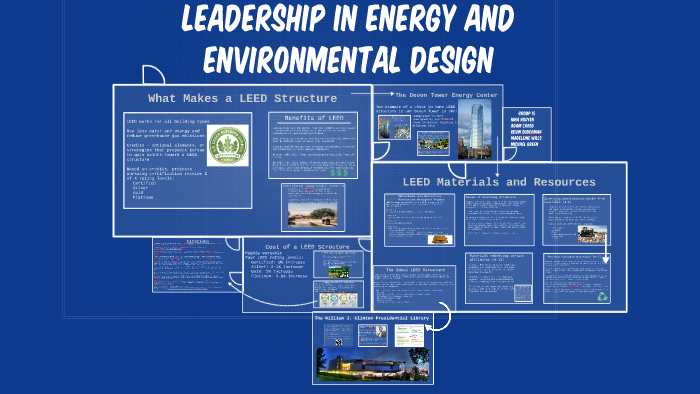
LEED Zero certifications recognize achievements in carbon, energy, water and waste. Leadership in Energy & Environmental Design (LEED) is an internationally recognized green building certification system and standard. It delivers third-party verification that a space was designed and built using best-in-class strategies to address its entire life cycle. These credits address sustainable building expertise as well as design measures not covered under the five main credit categories. LEED projects employ strategies across several basic areas that address key aspects of green buildings.
Eighty-thousand construction projects worldwide use certified and registered LEED standards. LEED buildings have a higher resale value and lower operational costs than non-LEED buildings. LEED is an essential strategy for achieving ESG, decarbonization and equity goals. LEED-certified buildings are a solid asset for investors, occupiers, and communities. They've proven to be top-performing commercial real estate investments.
It is also not yet climate-specific, although the newest version hopes to partially address this. Because of this, designers may be encouraged to make design choices to gain a LEED point, even though this choice is not optimal for the specific project. Additionally, LEED is not energy-specific; it only measures overall performance, allowing builders to choose how to achieve points under various categories. A USA Today review showed that 7,100 certified commercial building projects targeted cheap and easy green points, such as creating healthy spaces and providing educational displays in the building.[9] Few builders adopted renewable energy because of the initial cost. Builders game the rating system and use certain performances to compensate for the others, and energy conservation becomes the weakest part in the overall evaluation.
This cadence will start with the 2025 release of the balloted LEED v5 rating systems. The LEED program is being updated to provide greater flexibility for projects and more opportunity to evolve rating system requirements in response to a rapidly changing market. For existing buildings that are undergoing improvement work or little to no construction. Includes Existing Buildings, and also includes applications for Schools, Retail, Hospitality, Data Centers, and Warehouses & Distribution Centers. For entire or sub-sections of a city, to measure and manage water consumption, energy use, waste, transportation and human experience.
LEED’s proven and holistic approach helps virtually all building types lower carbon emissions, conserve resources, and reduce operating costs by prioritizing sustainable practices. Canada is one of the top territories in the world for LEED certification. Buildings have a substantial impact on the health and well-being of people and the planet.